
When families begin homeschooling, record keeping is often one of the first practical concerns that surfaces. Parents want to provide meaningful learning experiences, but they also need reassurance that they are meeting expectations and staying organised along the way.
In Australia, maintaining records is a normal part of homeschooling. While specific requirements vary by state or territory, most education authorities expect parents to demonstrate that learning is occurring through documentation, work samples, or planning outlines. This process is not intended to create pressure — rather, it supports transparency and reflection.
The encouraging news is that record keeping does not need to be complex or time-consuming. With a thoughtful system and realistic expectations, it can become a helpful tool rather than a burden.
This article explores practical approaches to keeping homeschool records that are manageable, effective, and sustainable.
Why Record Keeping Matters
Record keeping serves several purposes beyond regulatory compliance. It helps parents:
Track progress over time
Reflect on what is working
Adjust learning approaches
Prepare for registration reviews
Build confidence in their homeschool system
Seeing growth documented — whether through writing samples, creative projects, or skill development — provides reassurance that learning is moving forward.
It also reduces stress when review periods arrive, because information is already organised and accessible.
Understanding Australian Expectations
Although requirements vary between states, most authorities expect evidence showing:
Educational engagement
Coverage of learning areas
Development over time
Intentional planning
This evidence does not require daily lesson logs or professional-style reporting. Instead, it typically includes:
Samples of work
Learning summaries
Notes on activities
Plans or outlines
Photographs of projects
Parents often worry about recording too little, but it is equally common to over-document in the early stages. Finding balance is key.
A simple, consistent system is usually far more effective than an elaborate one that becomes difficult to maintain.
Tip 1 — Start Simple
The most sustainable record systems are the ones families can realistically continue.
Begin with:
A folder or binder
A digital storage space
Basic planning sheets
Occasional reflection notes
There is no need to create complex structures immediately. Your system can evolve as your confidence grows.
Starting small prevents overwhelm and encourages consistency.
Tip 2 — Collect Work Samples Regularly
Work samples are one of the most valuable forms of documentation. These can include:
Writing pieces
Maths exercises
Drawings or creative work
Project summaries
Reading responses
You do not need to keep everything. Selecting representative examples over time shows progression clearly.
Many families choose to collect:
One sample per subject each month
Before-and-after examples
Milestone achievements
This keeps documentation meaningful rather than excessive.
Tip 3 — Use Photos as Evidence
Learning often happens outside worksheets or textbooks. Photography is a simple way to capture experiences such as:
Science experiments
Outdoor learning
Creative construction
Cooking activities
Community engagement
A quick photo stored digitally can demonstrate educational depth and variety.
This approach is particularly helpful for younger learners or hands-on projects where written output may be limited.
Tip 4 — Maintain a Learning Journal
A brief journal provides valuable context for work samples.
This does not require detailed daily entries. Instead, consider:
Weekly summaries
Observations about progress
Challenges encountered
Interests emerging
These notes help illustrate learning journeys and support reflective teaching.
They also make review conversations smoother because they provide narrative alongside evidence.
Tip 5 — Track Goals, Not Just Tasks
Record keeping is not only about documenting what happened — it can also guide future learning.
Tracking goals allows parents to see:
Areas of growth
Skills needing reinforcement
Interests worth expanding
Goal tracking might include:
Term objectives
Subject focus areas
Personal development targets
This approach shifts record keeping from passive documentation to active guidance.
Tip 6 — Organise Records by Term or Month
Organisation improves usability.
Many families find it helpful to structure records into:
Monthly sections
Term-based folders
Subject categories
Consistent organisation makes information easy to locate and present.
It also prevents the last-minute stress of searching through scattered materials before a review period.
Tip 7 — Balance Paper and Digital Storage
Both paper and digital systems offer advantages.
Paper allows:
Easy browsing
Physical portfolio building
Tangible progress tracking
Digital storage offers:
Space efficiency
Photo storage
Backup security
Easy sharing
A hybrid approach often works best — physical samples combined with digital archiving.
The goal is accessibility, not perfection.
Tip 8 — Schedule Record Updates
Record keeping becomes stressful when left until the last minute.
Instead, consider setting a light rhythm:
Weekly sorting
Monthly organising
Term reflections
Short, regular updates prevent backlog and maintain clarity.
This approach supports sustainability rather than urgency-driven documentation.
Tip 9 — Avoid Perfectionism
One of the most important reminders for homeschooling parents is that records do not need to look professional or polished.
Education authorities expect evidence of engagement — not flawless presentation.
Focus on:
Authentic learning
Honest representation
Consistent effort
Record keeping should support your homeschool, not dominate it.
Let usefulness guide your approach.
Tip 10 — Use Planning Tools to Reduce Mental Load
As homeschooling responsibilities grow, structured tools can make documentation significantly easier.
Planning pages, trackers, and checklists help parents:
Stay organised
Monitor progress
Record learning naturally
Reduce decision fatigue
Many families discover that having ready-to-use templates instantly reduces uncertainty and mental load, replacing confusion with clarity and confidence from the very beginning.
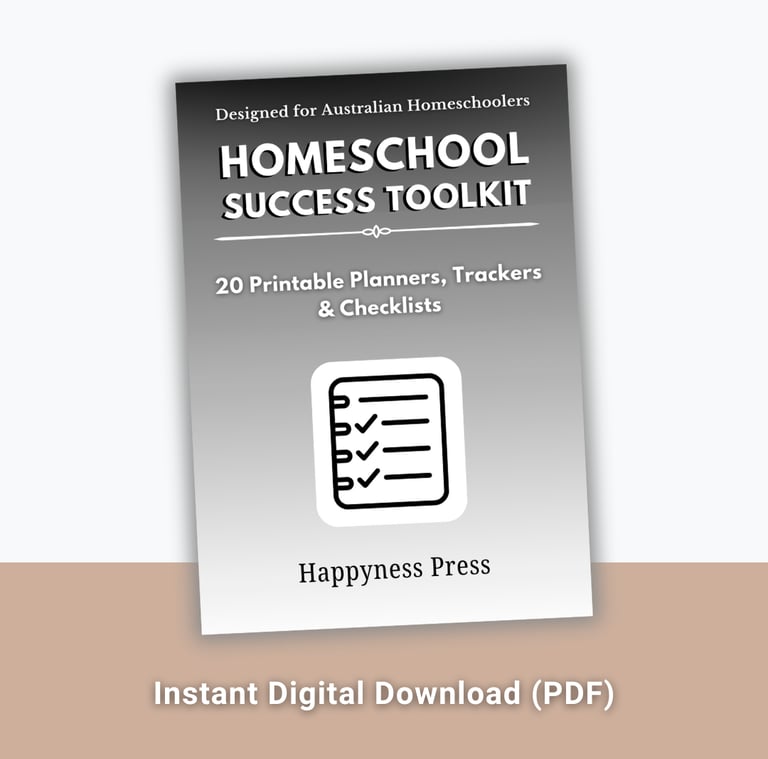
The Homeschool Success Toolkit was thoughtfully created to support Australian parents in managing record keeping in a calm, organised, and practical way. This toolkit includes 20 printable planners, trackers, and checklists designed to support families through every stage of the homeschool journey—from registration and yearly planning to daily learning, skill development, assessment tracking, and end-of-year reviews.
Together, these tools form a complete homeschool organisation system — helping parents stay prepared, compliant, and confident throughout the year without overwhelm.
A Sustainable Approach to Documentation
Record keeping is often viewed as an obligation, but with thoughtful systems it becomes a supportive element of homeschooling rather than a stressful requirement.
By collecting meaningful samples, organising materials regularly, and documenting progress in realistic ways, parents can build clear evidence of learning while also gaining insight into their child’s development.
Most importantly, remember that homeschooling documentation exists to reflect real learning — not to replicate institutional processes. Your records should serve your family first.
With balance, consistency, and simplicity, record keeping can become a steady companion to your homeschool journey rather than an added burden.
Record Keeping Tips for Australian Homeschool Parents
Recommended Articles




© 2026 Happyness Press. All rights reserved.
Happyness Press
Contact Us:
contact@happynesspress.com