
Homeschooling often feels overwhelming not because learning is too hard, but because everything feels like it’s happening at once. Lessons, household needs, emotional support, planning, adjusting, and thinking ahead all compete for attention. When days feel heavy, it’s tempting to search for a better schedule or a more detailed plan.
But what often brings the most relief isn’t a stricter timetable — it’s a gentler weekly rhythm.
A homeschool rhythm focuses on flow rather than fixed hours. It gives shape to the week without demanding perfection, and it creates predictability without pressure. Over time, this approach can reduce mental load and make learning feel more manageable for both parents and children.
Why rigid schedules increase overwhelm
Traditional schedules rely on exact timing: subjects at set hours, tasks assigned to specific days, and expectations that each week should look the same. While this works in some settings, it often clashes with real family life.
Energy levels change. Children have off days. Appointments, illness, and interruptions happen. When a rigid plan breaks, it can leave a sense of failure — even when learning is still happening.
A rhythm, by contrast, allows flexibility. It focuses on what generally happens rather than exactly when. This shift alone can reduce the constant feeling of being behind.
What a weekly homeschool rhythm really means
A weekly rhythm is a repeating pattern that provides structure without rigidity. Instead of assigning specific times, it sets gentle expectations for the flow of learning across the week.
For example:
Some days are heavier with focused learning
Other days are lighter, hands-on, or reflective
Certain activities repeat weekly, creating familiarity
There is space built in for rest and adjustment
This approach reduces decision-making. When the week has a familiar shape, fewer choices need to be made each day. That alone can ease overwhelm.
The value of anchor points
A simple rhythm usually relies on a few anchor points rather than a full schedule. These are recurring elements that help the week feel grounded.
Common anchor points might include:
A short daily learning block
Regular breaks and movement
One or two lighter learning days
A reset moment at the end of the week
These anchors don’t need to be complicated. Their purpose is to create predictability while allowing flexibility within each day.
How a rhythm supports children
Children often thrive when they know what to expect. A consistent rhythm provides a sense of security without forcing them into rigid patterns.
With a rhythm:
Learning continues even on low-energy days
Different ages can participate together more easily
Children experience consistency without pressure
Progress is measured over time, not day by day
Instead of focusing on whether a lesson happened at a certain hour, attention shifts to whether learning is happening steadily across the week.
How a rhythm supports parents
One of the most overlooked benefits of a weekly rhythm is how much it supports the parent.
A rhythm:
Reduces daily decision fatigue
Makes planning simpler
Allows flexibility without guilt
Creates clear stopping points
Encourages reflection rather than self-criticism
When expectations are realistic and repeatable, it becomes easier to notice what’s working — and to adjust gently when something isn’t.
Starting with what you already have
Creating a weekly rhythm doesn’t require starting over or changing everything at once. It often works best when built slowly.
Helpful starting steps include:
Observing which parts of the week already work well
Identifying where energy tends to drop
Repeating simple patterns instead of adding new ones
Keeping the focus on flow rather than output
A rhythm should fit the family’s real life, not an ideal version of it.
Using simple tools to hold the rhythm
Many parents find it helpful to use light planning tools to support their rhythm — not to control it, but to hold it gently.
Simple planners can:
Offer a visual overview of the week
Reduce the need to keep everything in your head
Allow space for adjustment
Encourage reflection rather than perfection
This is where gentle planning becomes supportive instead of overwhelming.
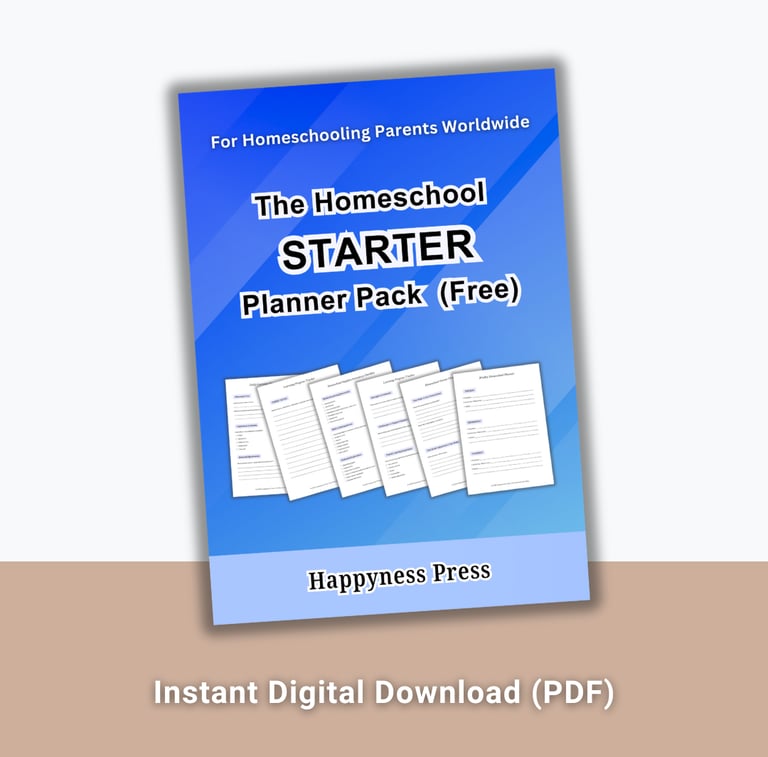
For parents who want a calm way to organise their week without rigid schedules, Free Homeschool Planner Pack was created with this exact approach in mind. It includes five homeschool planners, trackers and checklists — including a daily learning flow planner, a weekly homeschool planner, and a homeschool parent check-in — all designed to support rhythm rather than pressure.
It’s not something to follow perfectly, but something to lean on when gentle rhythm feels helpful. Download whenever you’re ready.
A gentler way forward
Overwhelm often comes from trying to do too much, too precisely, for too long. A weekly homeschool rhythm offers another path — one that values sustainability over intensity.
Learning doesn’t require perfect days. It requires steady care, realistic expectations, and space to adjust.
When the week has a gentle rhythm, homeschooling can begin to feel less like something to manage — and more like something that naturally unfolds.
And that shift alone can make all the difference.
A Simple Weekly Homeschool Rhythm That Reduces Overwhelm
Recommended Articles





© 2026 Happyness Press. All rights reserved.
Happyness Press
Contact Us:
contact@happynesspress.com