
Homeschooling more than one child can be deeply rewarding — but it also brings a level of complexity that many parents don’t anticipate. Different ages, different learning styles, different energy levels, and competing needs can turn even well-planned days into something that feels overwhelming.
Exhaustion often doesn’t come from homeschooling itself. It comes from trying to meet every need simultaneously, manage every subject perfectly, and maintain constant engagement throughout the day. The good news is that sustainable homeschooling with multiple children is possible. It doesn’t require perfection — it requires thoughtful structure, realistic expectations, and systems that reduce strain rather than increase it.
This article explores practical approaches that help families teach two or three children without reaching constant fatigue.
Understand That Balance Is Dynamic
One of the first mindset shifts that supports sustainability is recognising that balance rarely looks equal. Children do not need the same amount of time or attention every day.
Some days:
One child will require more guidance
Another will work independently
A third may simply need reassurance
Trying to divide attention evenly often leads to frustration. Instead, aim for responsiveness rather than equality. Meeting needs as they arise creates a more natural flow and reduces pressure on both parent and child.
Over time, children also learn patience, flexibility, and respect for each other’s learning space — valuable life skills in themselves.
Use Shared Learning Whenever Possible
Teaching subjects individually can quickly drain energy. Finding opportunities to combine learning helps reduce repetition and creates connection between siblings.
Shared learning works well for:
Reading aloud
Science topics
History themes
Art and creative projects
Discussions and reflection
You can adapt depth of understanding rather than teaching entirely separate material. Older children can explore further details while younger ones absorb core ideas.
This approach not only conserves energy — it builds collaboration and shared curiosity.
Encourage Gradual Independence
It is unrealistic to expect all children to work independently at once, especially early on. Instead, build independence gradually and in rotation.
For example:
One child works independently
One child receives instruction
Another completes hands-on activities
Then rotate roles.
Teaching children how to manage simple tasks, check instructions, or begin work without constant prompting significantly reduces parental workload over time. Independence is a skill that develops with practice and guidance — and it becomes one of the strongest protections against burnout.
Simplify the Daily Structure
Overly complicated schedules often collapse under real-life demands. A simple structure is more sustainable.
Consider a rhythm like:
Morning focus block
Midday shared activity
Afternoon independent work or exploration
Reading or reflection time
This creates predictability without rigidity. Children know what to expect, and parents avoid constant decision fatigue.
Consistency does not require strict timetables — it requires reliable patterns.
Accept That Not Everything Must Be Daily
A common source of exhaustion is trying to cover every subject every day for every child. This is rarely necessary.
Rotating subjects can provide relief:
Mathematics and reading — frequent focus
Science, history, art — alternate days
Projects — weekly engagement
Learning remains meaningful while reducing intensity.
Depth and retention often improve when children have time to reflect rather than rushing through content.
Create Prepared Learning Spaces
Physical organisation plays a larger role than many expect. When materials are accessible and clearly arranged, transitions become smoother and interruptions decrease.
Helpful adjustments include:
Designated storage for each child
Easy access to tools and supplies
Minimal clutter in learning areas
Visual cues or task lists
These small environmental supports prevent repeated searching, resetting, and redirection — saving mental energy throughout the day.
Recognise the Value of Quiet Work
Parents sometimes feel pressured to maintain continuous interaction. However, quiet independent work is not neglect — it is development.
Activities such as:
Reading
Writing
Drawing
Constructing
Reflective thinking
Allow children to process learning while giving parents space to reset, observe, or prepare.
Building comfort with quiet learning periods benefits both child development and parental wellbeing.
Protect Your Energy Intentionally
Exhaustion accumulates when energy is not guarded. Sustainable homeschooling requires acknowledging personal limits without guilt.
Practical protections include:
Planning lighter days when needed
Avoiding comparison with other families
Simplifying expectations
Allowing flexibility during challenging weeks
Resting when energy dips
Homeschooling is a long-term journey. Preserving energy ensures continuity and emotional stability.
Use Connection as the Anchor
When multiple children compete for attention, stress levels can rise quickly. Intentional connection helps stabilise the atmosphere.
This might involve:
Individual conversations
Shared humour
Encouragement
Acknowledgement of effort
Strong relational foundations often make learning smoother and reduce behavioural friction — which ultimately conserves energy.
Children who feel secure tend to cooperate more willingly.
Accept Imperfect Days
Even well-designed systems encounter difficult days. Illness, fatigue, unexpected commitments, or emotional strain can disrupt routines.
Progress does not require flawless consistency. It requires resilience and continuation.
Allowing room for imperfect days prevents discouragement and helps families maintain perspective over the long term.
Learning unfolds across months and years — not single afternoons.
Build Systems That Support You
Many parents find that exhaustion decreases significantly once clear systems replace constant improvisation. Structured approaches reduce mental load and decision fatigue.
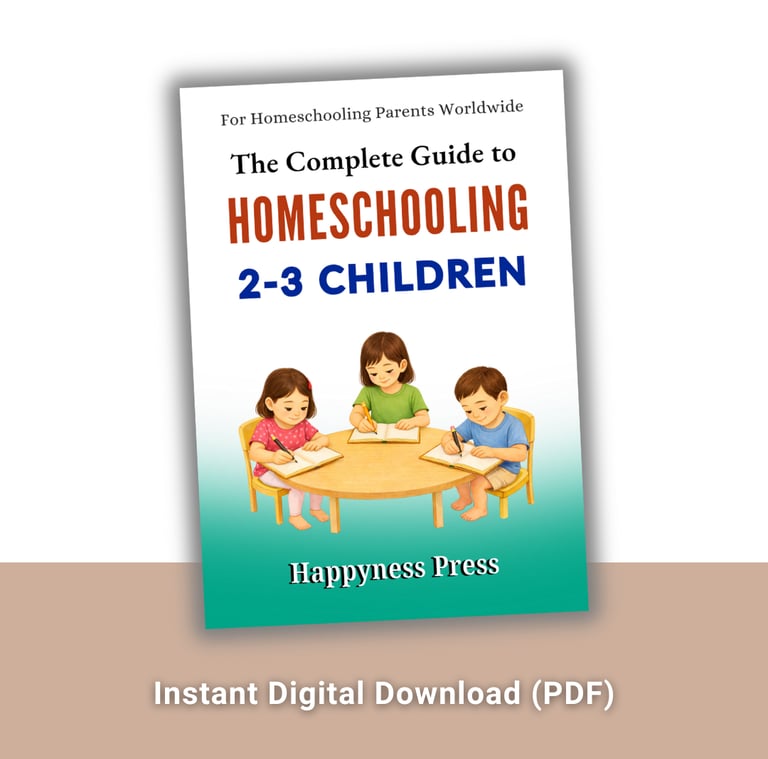
If you’re ever looking for deeper guidance in this area, the book “The Complete Guide to Homeschooling 2–3 Children” was created specifically for families navigating this dynamic. It offers practical frameworks, planning tools, and strategies designed to bring clarity and sustainability to multi-child homeschooling — helping parents move from overwhelm towards confidence.
It’s intended as a supportive companion for parents who want structure grounded in real family life rather than idealised expectations.
Final Thoughts
Homeschooling two or three children is not about maintaining perfect order or endless energy. It is about building a flexible, compassionate system that supports growth — for both children and parent.
Remember that shared learning, gradual independence, simple daily rhythms, and protected energy can help transform exhaustion into steadiness. Challenges will still arise, but they no longer dominate the experience.
Over time, families often discover that homeschooling multiple children fosters cooperation, empathy, adaptability, and strong relational bonds — outcomes that extend far beyond academics.
With thoughtful adjustments and realistic expectations, it is possible to guide multiple learners while preserving your wellbeing and sense of calm. Sustainability is not accidental — it is built step by step.
How to Homeschool 2–3 Children Without Constant Exhaustion
Recommended Articles
© 2026 Happyness Press. All rights reserved.
Happyness Press
Contact Us:
contact@happynesspress.com