
Starting homeschooling can feel exciting — and also a little overwhelming. Many parents reach this point after asking themselves whether learning at home might suit their child better, but then quickly realise there are practical steps to understand before beginning.
The good news is that homeschooling in Australia is legal, supported, and well established. Families across every state and territory are educating their children at home in ways that fit their values, pace, and circumstances. While each state manages its own requirements, the overall process is far more approachable than many parents expect.
This guide walks through the key steps to help you move forward with clarity and confidence.
Understanding Homeschooling in Australia
Homeschooling means parents take primary responsibility for their child’s education rather than enrolling them in a traditional school. It does not mean replicating a classroom at home. Learning can be structured, flexible, interest-led, or a mix of approaches.
Across Australia, homeschooling is regulated at the state or territory level. This means requirements differ slightly depending on where you live, but most regions share common expectations:
Registration or approval with the education authority
A learning plan or outline of educational approach
Evidence that education is occurring
Periodic review or renewal
Homeschooling families are not required to follow one national curriculum or purchase specific programs. Parents typically design learning experiences that support their child’s development while aligning with state expectations.
Step 1 — Learn Your State Requirements
The first practical step is understanding the rules where you live. Because regulation is state-based, processes vary slightly between regions such as NSW, Victoria, Queensland, Western Australia, South Australia, Tasmania, ACT, and Northern Territory.
Generally, you will need to:
Submit an application
Provide a learning outline or plan
Receive approval or registration
Maintain records of learning
Education authority websites provide official guidance and application forms. Reviewing these early helps remove uncertainty and gives you a clear sense of expectations.
This step often feels intimidating, but most families discover that requirements are designed to ensure educational engagement — not perfection.
Step 2 — Clarify Your Reasons and Goals
Before planning lessons or purchasing materials, take time to reflect on why homeschooling feels right for your family. This doesn’t need to be formal — just thoughtful.
Parents often choose homeschooling to:
Support different learning styles
Reduce stress or anxiety
Create flexible schedules
Strengthen family connection
Follow personalised learning interests
Clarifying your goals helps guide your decisions later — from choosing resources to structuring your day.
Your goals may evolve over time. Homeschooling is a journey, not a fixed blueprint.
Step 3 — Choose an Approach That Fits Your Family
There is no single “correct” homeschool method. Australian families use many styles, including:
Structured curriculum-based learning
Flexible routine-based learning
Project or interest-led exploration
Hybrid combinations
Most families develop a rhythm that balances structure and flexibility.
Especially in the early stages, avoid overcomplicating this step. A simple starting framework is often more sustainable than an overly ambitious plan.
Focus on consistency, curiosity, and realistic expectations rather than perfection.
Step 4 — Prepare a Learning Plan
When applying for registration, most states request an outline of how you intend to support your child’s learning.
This doesn’t require detailed lesson planning. Instead, it usually includes:
Broad subject areas
General learning goals
Types of resources or activities
Ways progress may be observed
Think of this as a map rather than a script.
Parents often worry about getting this “right,” but learning plans are meant to demonstrate intention and engagement — not rigid scheduling.
Planning tools or simple templates can make this step far easier and less time-consuming.
Step 5 — Create a Practical Daily Rhythm
Homeschooling does not require replicating school hours. Many families discover that meaningful learning takes far less time when it is focused and distraction-free.
A gentle rhythm might include:
Core learning time
Independent exploration
Reading or creative activities
Outdoor movement
Life skills
The goal is flow — not rigidity.
Some days will run smoothly, others won’t. Flexibility is part of sustainable homeschooling.
Step 6 — Gather Resources Thoughtfully
It’s tempting to purchase everything at once, but beginning gradually is often wiser.
Many families start with:
Basic stationery
Reading materials
Simple maths tools
Printable planning pages
Library access
Resources can expand as your confidence grows.
Homeschooling is not defined by materials. Engagement, conversation, and exploration play equally important roles.
Step 7 — Keep Simple Records
Record keeping supports registration reviews and helps parents reflect on progress.
Common methods include:
Learning journals
Work samples
Photos of projects
Checklists
Planners or trackers
These do not need to be complex or time-consuming. Consistency matters more than detail.
Organised systems reduce stress when renewal or review periods arrive.
Step 8 — Connect with the Homeschool Community
While homeschooling happens at home, it is not isolated.
Across Australia there are:
Local groups
Co-learning meetups
Online communities
Resource networks
Connecting with other families provides reassurance, idea sharing, and emotional support.
New homeschool parents often find these connections invaluable.
Step 9 — Expect an Adjustment Period
The first months of homeschooling involve transition — for both parent and child.
You may notice:
Shifting routines
Testing boundaries
Experimenting with structure
Discovering new strengths
This phase is normal.
Give your family time to settle. Sustainable rhythms develop gradually.
Step 10 — Focus on Progress, Not Perfection
Homeschooling is not about flawless execution. It’s about providing an environment where learning continues steadily and meaningfully.
Some days will feel productive. Others will feel uncertain.
Progress comes through:
Patience
Reflection
Adjustment
Compassion toward yourself
Confidence grows with experience.
Moving Forward with Confidence
Beginning homeschooling in Australia involves preparation, but it does not require having everything figured out from the start. Understanding regulations, setting realistic goals, planning thoughtfully, and building gentle routines form a strong foundation.
With time, systems develop, confidence builds, and families discover approaches uniquely suited to their children.
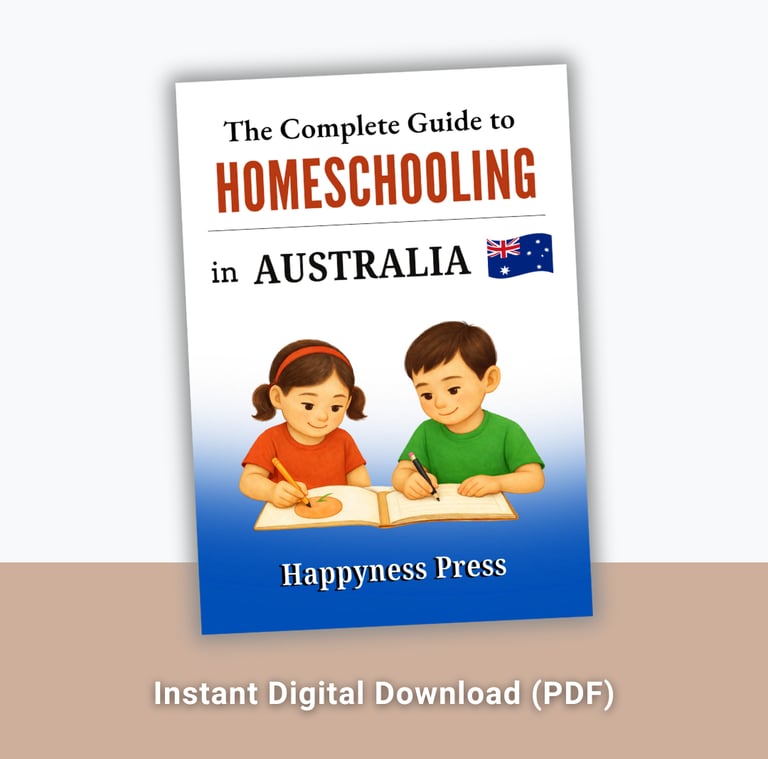
For parents looking for a clear and reliable starting point, resources such as The Complete Guide to Homeschooling in Australia can provide valuable support during the early stages of homeschooling. Designed to align with what families most often search for — including homeschool laws in Australia, how to choose a homeschool style, understanding your child’s learning style, how to create your homeschool space, choosing curriculum & resource, creating your daily routine, and record-keeping checklist — this guide brings together all essential information in one structured place.
Having this kind of comprehensive overview can make a significant difference for beginners, helping parents understand requirements, plan confidently, and start homeschooling in Australia with clarity rather than confusion. For many families, access to a single resource that explains how to homeschool in Australia step by step makes the transition smoother and far less overwhelming.
How to Start Homeschooling in Australia
Recommended Articles
© 2026 Happyness Press. All rights reserved.
Happyness Press
Contact Us:
contact@happynesspress.com